Elko County School District (ECSD) media specialists have been awarded $94,282 in Regional STEM Network Grant funding from the Nevada Governor’s Office of Science, Innovation and Technology (OSIT) to implement the Elko County Media Specialists Drone Initiative beginning in the 2026–2027 school year.
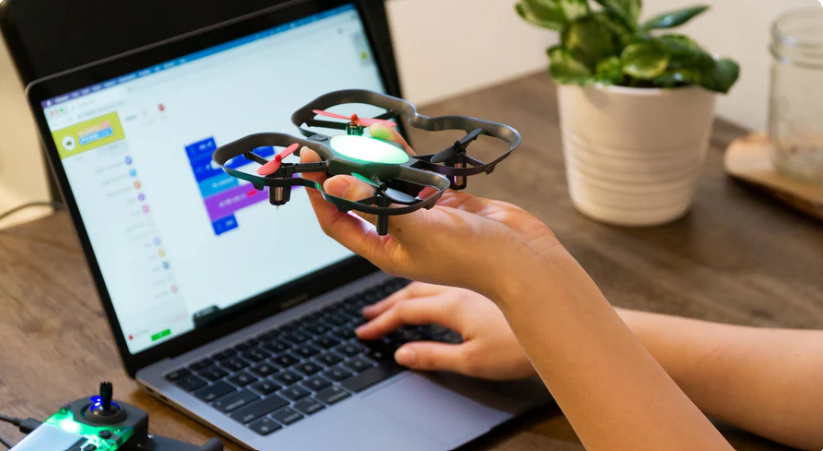
The initiative will introduce hands-on drone technology into library media classrooms across the district, providing approximately 1,700 students—primarily in grades 4–6, with expanded access in rural K–8 schools—the opportunity to engage in real-world computer science learning as part of the regular school day.
By moving beyond traditional, screen-based coding, the program allows students to apply programming concepts through physical, interactive experiences. Students will build skills in problem-solving, collaboration, and algorithmic thinking, aligned with Nevada Computer Science Standards.
The project is led by Kimberlee Merrill, project director and media specialist at Spring Creek Elementary School, and Kathryn Hammer, project coordinator and media specialist at Sage Elementary School.
“Our goal is to take computer science off the screen and make it real for students,” said Merrill. “When students can see their code come to life through flight, it deepens understanding and builds confidence in ways that traditional instruction cannot.”
Hammer emphasized the importance of access. “This model ensures every student has the opportunity to engage in this level of STEM learning,” she said. “By embedding it into the school day, we’re removing barriers and opening doors for all students.”
“This is exactly the kind of opportunity we want for our students,” said ECSD Superintendent CJ Anderson. “We are committed to expanding access to meaningful, real-world learning experiences, and this initiative ensures that all students—regardless of where they live—can engage in high-quality STEM education that prepares them for the future.”
The program is designed to remove barriers often associated with after-school or competition-based STEM programs by embedding drone technology directly into the curriculum. This approach ensures equitable access for students across the district, including those in rural and Title I schools.
Implementation will begin with professional development for media specialists in fall 2026, followed by phased classroom integration throughout the school year. The initiative is structured for long-term sustainability, with plans to expand to additional grade levels in future years.